
Hazardous & ADR
What ADR actually means for your freight, and why the carrier matters
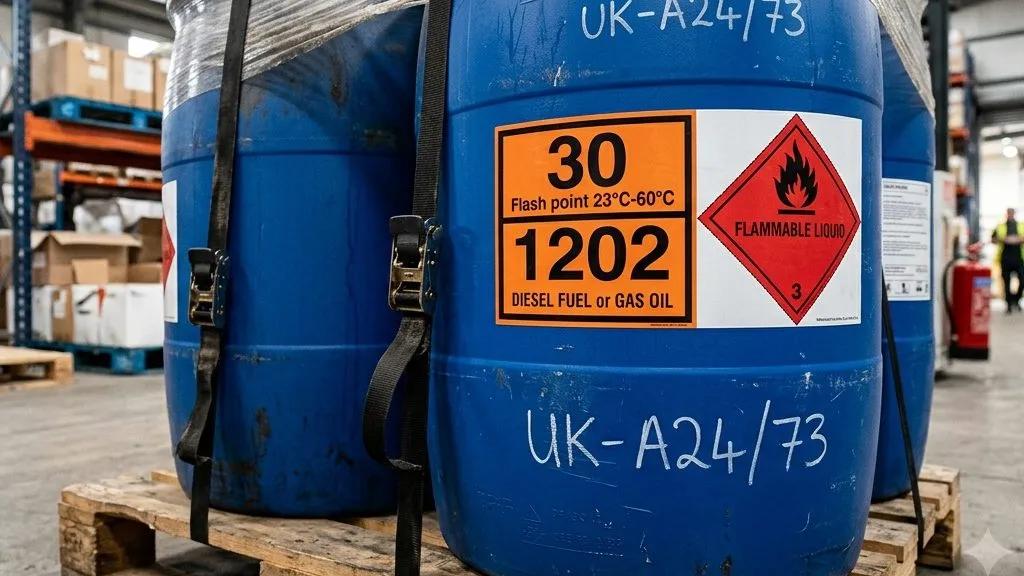
If you move paint, batteries, aerosols, cleaning chemicals or fuel, sooner or later someone will ask whether your load is ADR. It pays to know what that means before it holds up a delivery.
So what is ADR?
ADR is the European Agreement concerning the International Carriage of Dangerous Goods by Road. In plain terms it is the rulebook for moving dangerous goods on the road. It sets out how goods are classified, how they are packed and labelled, what paperwork travels with them, and what training the driver and vehicle need to carry them safely.
It is not a formality. Get the classification wrong at the start and everything downstream follows the mistake.
The nine classes
Dangerous goods are grouped into nine classes by the kind of risk they pose:
- Class 1 explosives
- Class 2 gases, including aerosols and compressed gases
- Class 3 flammable liquids, such as paints, solvents and fuels
- Class 4 flammable solids and substances liable to spontaneous combustion
- Class 5 oxidising substances and organic peroxides
- Class 6 toxic and infectious substances
- Class 7 radioactive material
- Class 8 corrosives, such as acids and some cleaning products
- Class 9 miscellaneous, including lithium batteries and environmentally hazardous substances
Where shippers trip up
Most problems we see are not exotic. They are small things missed before the goods leave the door:
- Wrong or missing classification. Guessing the UN number, or assuming a product is not in scope because it is sold on the high street.
- No safety data sheet. The SDS tells us how to handle, segregate and label the goods. Without it we are working blind.
- Limited quantity assumptions. Small packs can qualify for lighter rules, but only within set thresholds. It is easy to tip over them.
- Mixed loads. Some classes must not travel together. Segregation is a legal requirement, not a preference.
Get the classification wrong and everything after it is wrong too: the packaging, the labelling, the paperwork and the vehicle.
Why the carrier matters
Moving dangerous goods is not simply a case of putting a warning label on a pallet. Our drivers are ADR qualified in the movement and handling of these goods, both in the UK and across Europe. Our vehicles are equipped for the job, and our team knows what can travel together and what cannot.
Through our membership of the Hazchem Network, we can also move next-day ADR consignments across the UK and Ireland on a hub-and-spoke pallet network, which keeps urgent dangerous goods moving without the cost of a dedicated vehicle.
If you are not sure whether your goods are in scope, ask before you book. It is a short conversation that saves a delayed load. Speak to our hazardous freight team on 0161 975 9000.